RERA Explained: What Every Homebuyer Should Know

Buying a home is a major decision. For most people, it involves years of savings, a home loan, and a long-term financial commitment. Naturally, buyers want to know that their money is safe and that the property they are purchasing will be delivered as promised.
This is where RERA Rules become important.
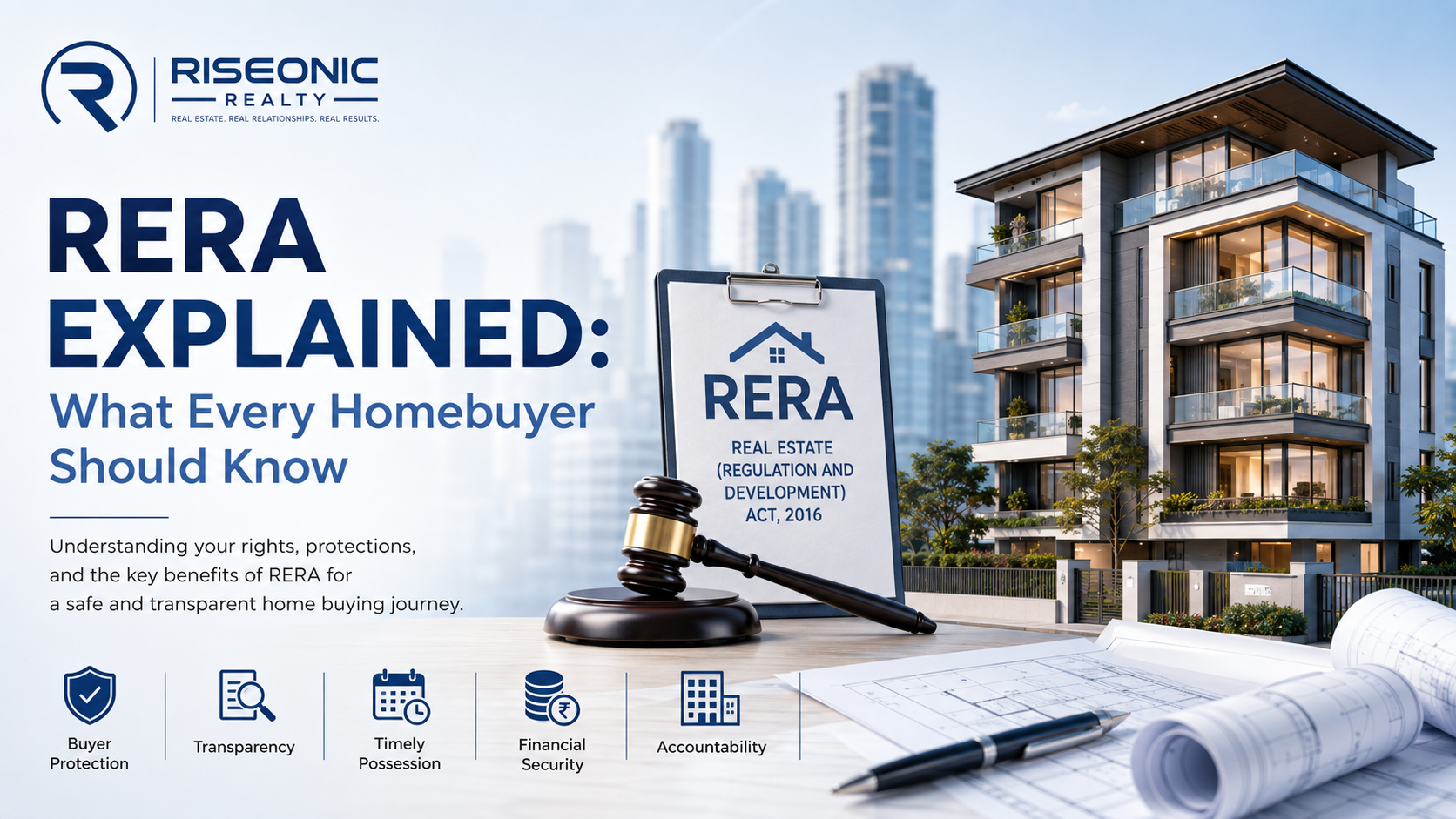
RERA, or the Real Estate (Regulation and Development) Act, 2016, was introduced to bring greater transparency, accountability, and consumer protection to the Indian real estate sector. The law created a regulatory framework for eligible real estate projects and established mechanisms through which homebuyers can seek information and address certain disputes.
But what does RERA actually mean for an ordinary homebuyer? Let's understand RERA Rules in simple language and look at the things you should check before buying a property.
What Are RERA Rules?
RERA Rules Make Property Buying More Transparent
Before RERA, homebuyers could sometimes face problems such as project delays, unclear information, changes in plans, or difficulty getting proper updates about a project.
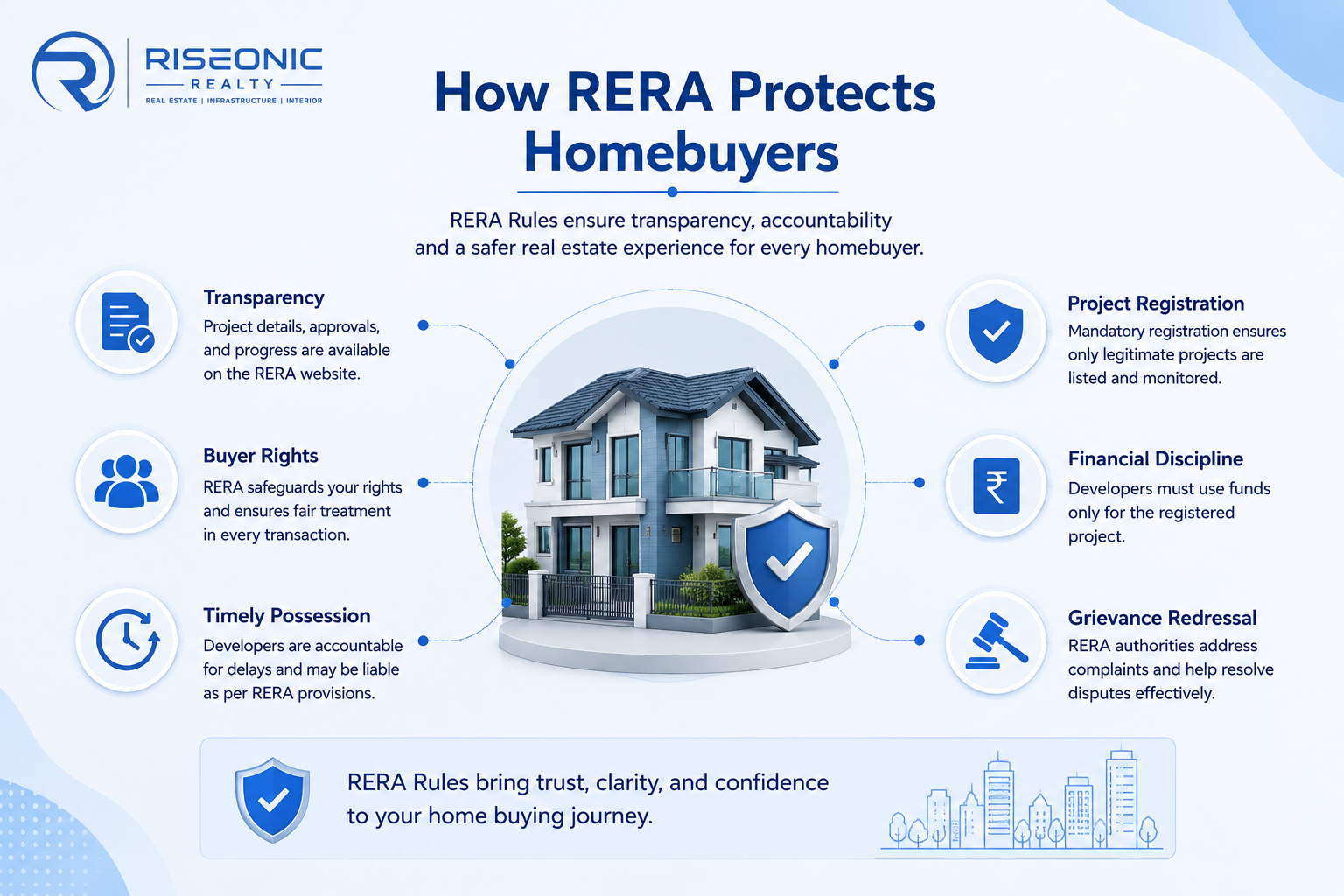
The RERA framework was designed to improve transparency and protect the interests of people buying plots, apartments, and buildings. It also provides for regulatory authorities and an appellate mechanism for handling complaints and disputes.
In simple terms, RERA Rules are meant to make the relationship between developers and buyers more transparent and accountable.
However, RERA does not mean that every property transaction is automatically risk-free. Buyers still need to conduct their own due diligence and verify documents before making a purchase.
Why RERA Rules Matter to Homebuyers
RERA Rules Give Buyers Access to Important Information
One of the biggest advantages of RERA is greater access to project-related information.
For eligible registered projects, buyers can check important details relating to the project, promoter, approvals, development status, and other information required under the regulatory framework. This gives buyers a better opportunity to compare projects and make informed decisions.
Imagine you're comparing two residential projects. Instead of relying only on advertisements or what a salesperson tells you, you can look for official project information and compare the details available to you.
That extra transparency can make a big difference when you're investing a significant amount of money.
Check RERA Registration Before Buying
RERA Rules Require Registration for Eligible Projects
One of the first things a buyer should do before booking a property is check whether the project is required to be registered under RERA and, if so, whether it is registered with the relevant state authority.
RERA establishes a framework for registration of real estate projects and real estate agents, subject to the Act and applicable rules.
A project registration number can help buyers locate official project information on the relevant state RERA portal.
Don't rely only on a brochure, advertisement, or verbal assurance. Take the time to check the official information yourself.
Understand Your Rights Under RERA Rules
RERA Rules Protect Homebuyer Interests
RERA gives homebuyers specific rights and also places responsibilities on developers and buyers.
For example, the Act includes provisions dealing with the rights and duties of allottees, promoter responsibilities, project information, possession-related matters, and dispute resolution.
This means buyers should not think of RERA only as a registration number. It is a broader regulatory framework designed to bring more accountability to real estate transactions.
At the same time, buyers also have responsibilities. Making payments according to the agreed terms, following the agreement for sale, and completing their own obligations are important parts of the buying process.
RERA Rules and Project Delays
RERA Rules Address Delayed Possession
Delayed possession is one of the biggest concerns for homebuyers. A family may have planned its finances, home loan, rental expenses, and relocation around the expected possession date.
RERA contains provisions dealing with the consequences of delays and the rights of allottees in certain circumstances. Depending on the situation and applicable provisions, buyers may have rights relating to withdrawal, refund, interest, or compensation.
However, the exact remedy can depend on the facts of the case, the agreement, applicable state rules, and the circumstances surrounding the delay.
This is why buyers should carefully read the agreement for sale instead of relying only on a promised possession date mentioned in marketing material.
Carpet Area and Property Information
RERA Rules Improve Clarity Around Property Details
When buying a home, it's easy to get confused by terms such as built-up area, super built-up area, and carpet area.
RERA introduced greater standardisation and transparency around information that developers provide to buyers. This helps buyers understand what they are actually purchasing rather than relying on vague descriptions.
Before booking a property, carefully compare the carpet area, floor plan, specifications, amenities, and other details mentioned in the official project documents.
A few minutes spent checking these details can prevent misunderstandings later.
How RERA Rules Help With Transparency
RERA Rules Encourage Better Accountability
RERA was created with several broad objectives, including protecting allottee interests, improving transparency, reducing fraud and delays, encouraging professionalism, and establishing mechanisms for dispute resolution.
For a homebuyer, this means having access to a more structured regulatory environment.
It also encourages buyers to ask better questions.
Instead of simply asking, "What is the price?", a smart buyer should also ask:
Is the project registered?
What approvals are available?
What is the promised completion timeline?
What information is available on the state RERA portal?
What does the agreement for sale say?
These questions can help you make a more informed decision.
What Homebuyers Should Check Before Booking
Follow RERA Rules but Don't Skip Your Own Research
RERA registration is important, but it should not be the only thing you check before purchasing a property.
You should also review the property's legal documents, title-related information, approvals, agreement for sale, payment schedule, possession terms, and other relevant documents.
If you're unsure about legal documents or contractual terms, consider consulting a qualified property lawyer before signing.
RERA is an important layer of protection, but professional legal advice can be valuable when you're making a large financial commitment.
How to Check RERA Information
RERA Rules Make Official Project Information Easier to Verify
Every state has its own implementation and regulatory authority under the RERA framework. If you're considering a property, look for the relevant state RERA portal and search for the project using its name, promoter details, or registration information, wherever the portal allows.
For Maharashtra property buyers, this is particularly useful because projects can be checked through the state's regulatory system.
For the central legislation and official legal text, you can refer to the Real Estate (Regulation and Development) Act, 2016 on India Code.
RERA Rules and Your Homebuying Decision
Use RERA Rules as One Part of Your Research
Buying a home should never be based on one factor alone.
Location, connectivity, construction quality, developer reputation, amenities, price, financing, future infrastructure, and resale potential all matter. RERA information adds another important layer to this research.
If you're a first-time buyer, you may also find our guide on Top 10 Tips for First-Time Home Buyers useful when planning your purchase.
Internal Link: Top 10 Tips for First-Time Home Buyers
Taking a little extra time to research a property today can help you avoid unnecessary problems later.
How Riseonic Realty Can Help
RERA Rules Are Easier to Understand With the Right Guidance
Real estate decisions can sometimes feel complicated, especially when you're dealing with property documents, project details, financing, and market information at the same time.
At Riseonic Realty, we aim to make the property search process simpler by helping buyers explore real estate opportunities with better information and guidance.
Whether you're purchasing your first home, upgrading to a larger property, or exploring real estate as an investment, taking an informed approach can help you move forward with greater confidence.
Conclusion
Understanding RERA Rules is an important part of becoming a smarter homebuyer. RERA was introduced to improve transparency, accountability, and consumer protection in India's real estate sector. It provides a framework for project registration, promoter responsibilities, buyer rights, and dispute resolution.
But remember, RERA should be one part of your overall property research. Always verify official project information, read your agreements carefully, check relevant documents, and seek professional advice when necessary.
Buying a home is a big decision. The more informed you are, the more confident you can make it.
For property opportunities and real estate guidance, explore Riseonic Realty.